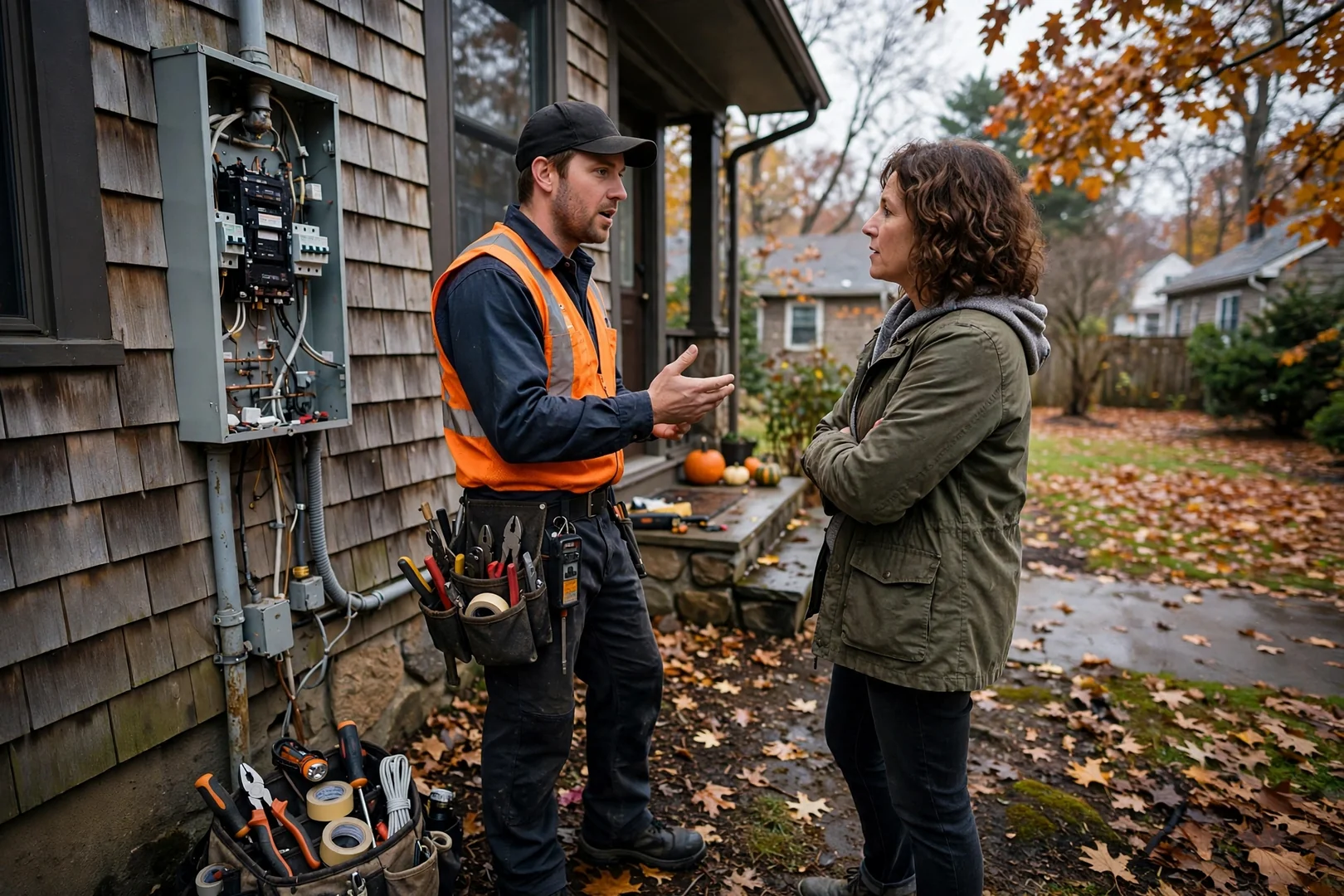
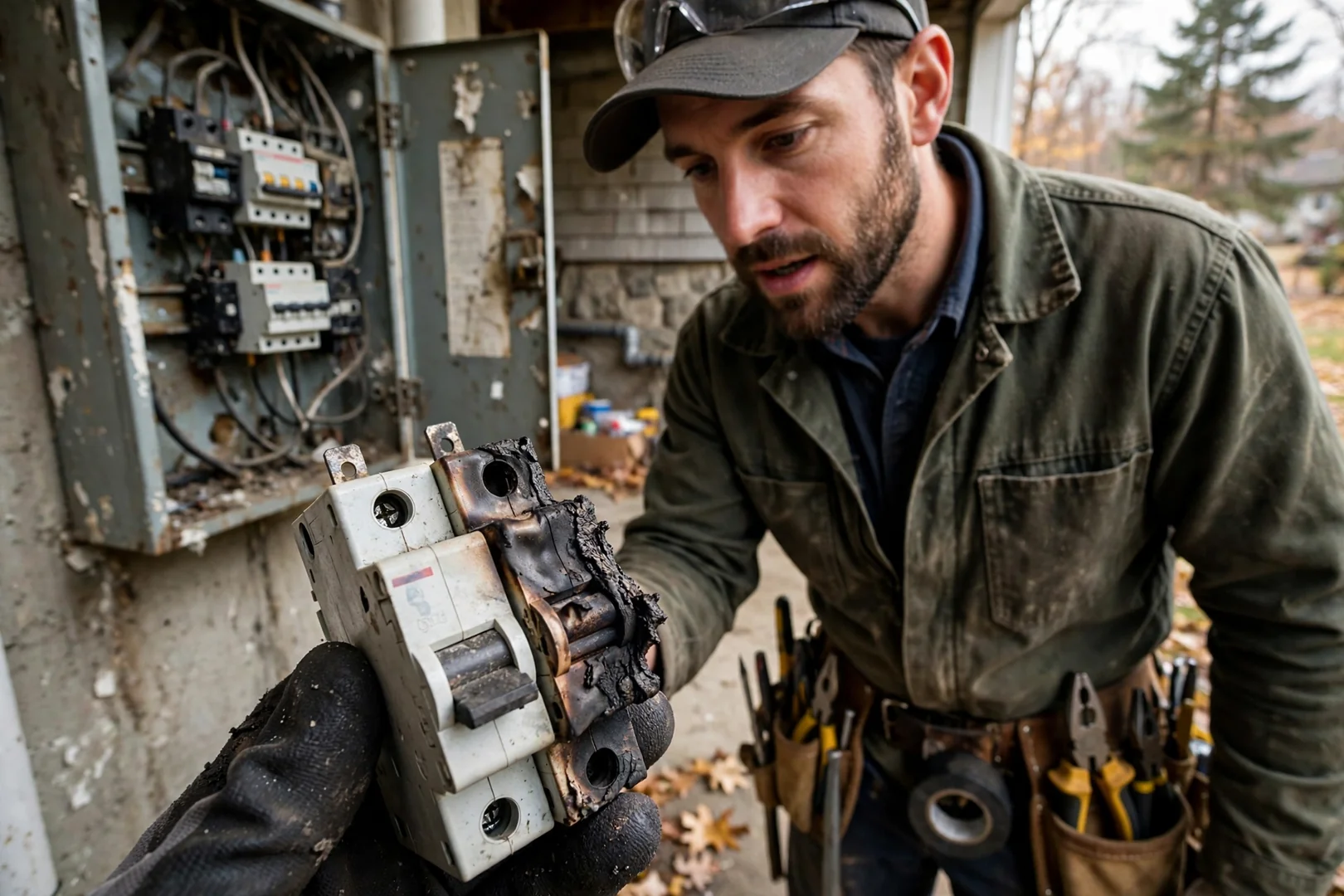
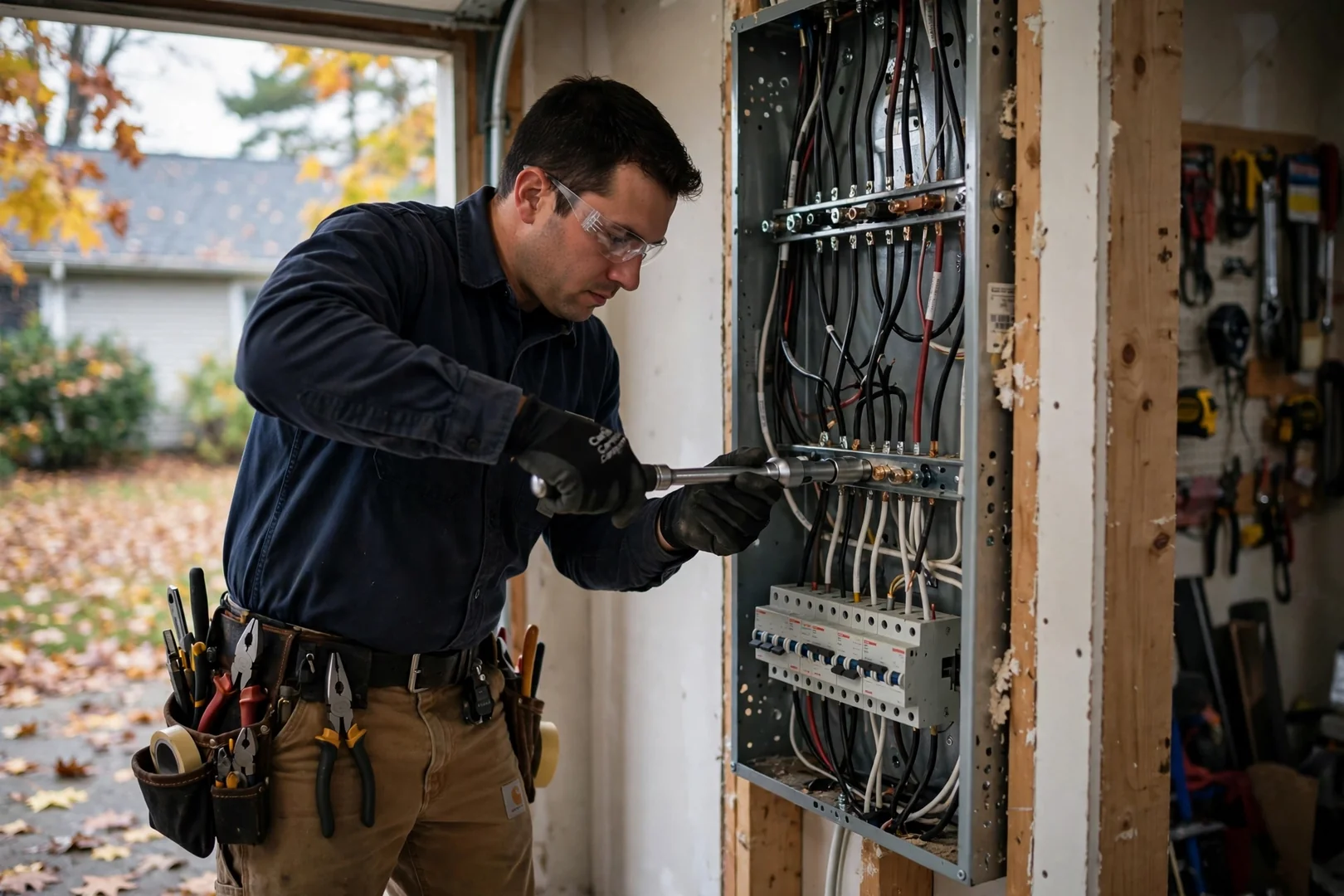
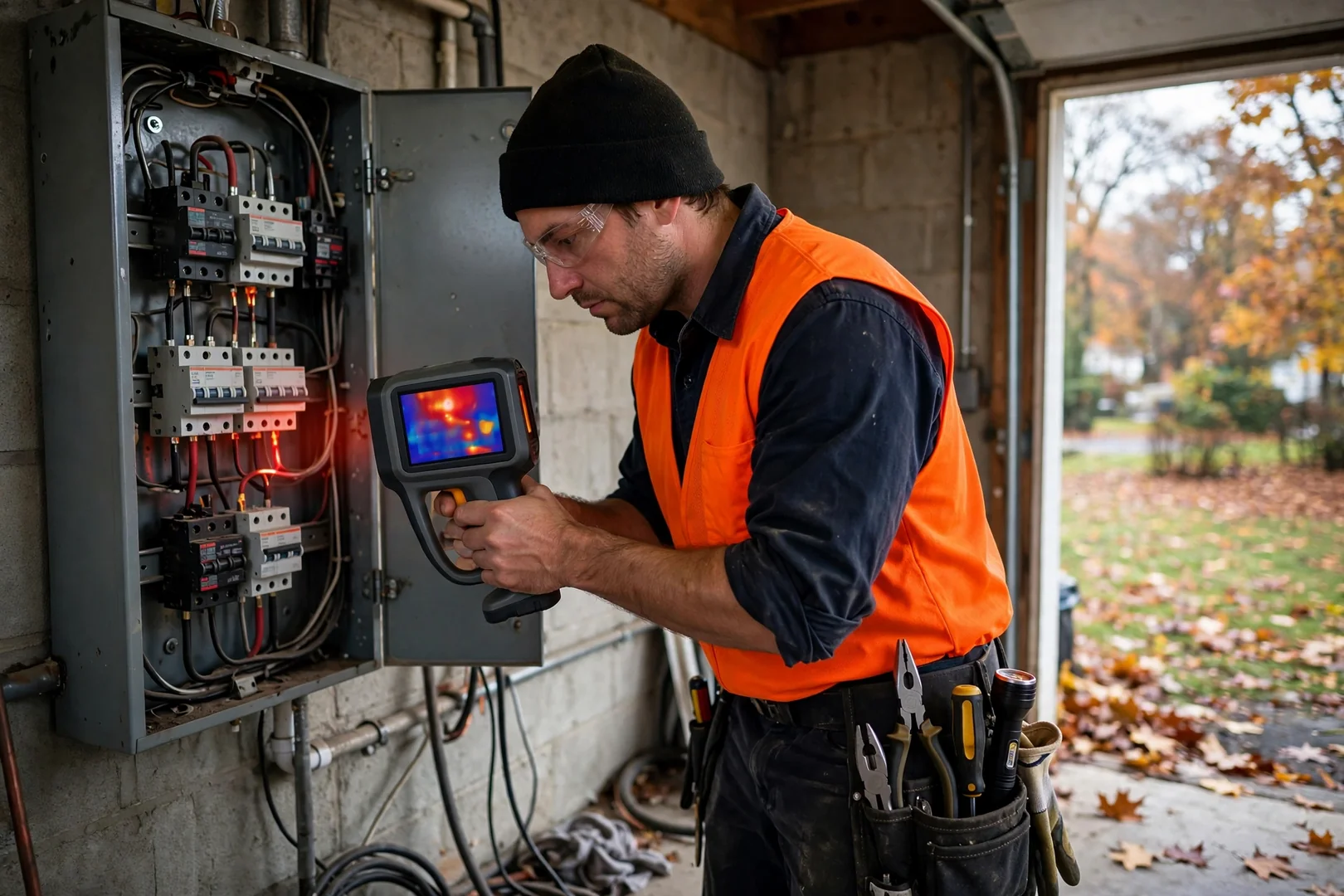
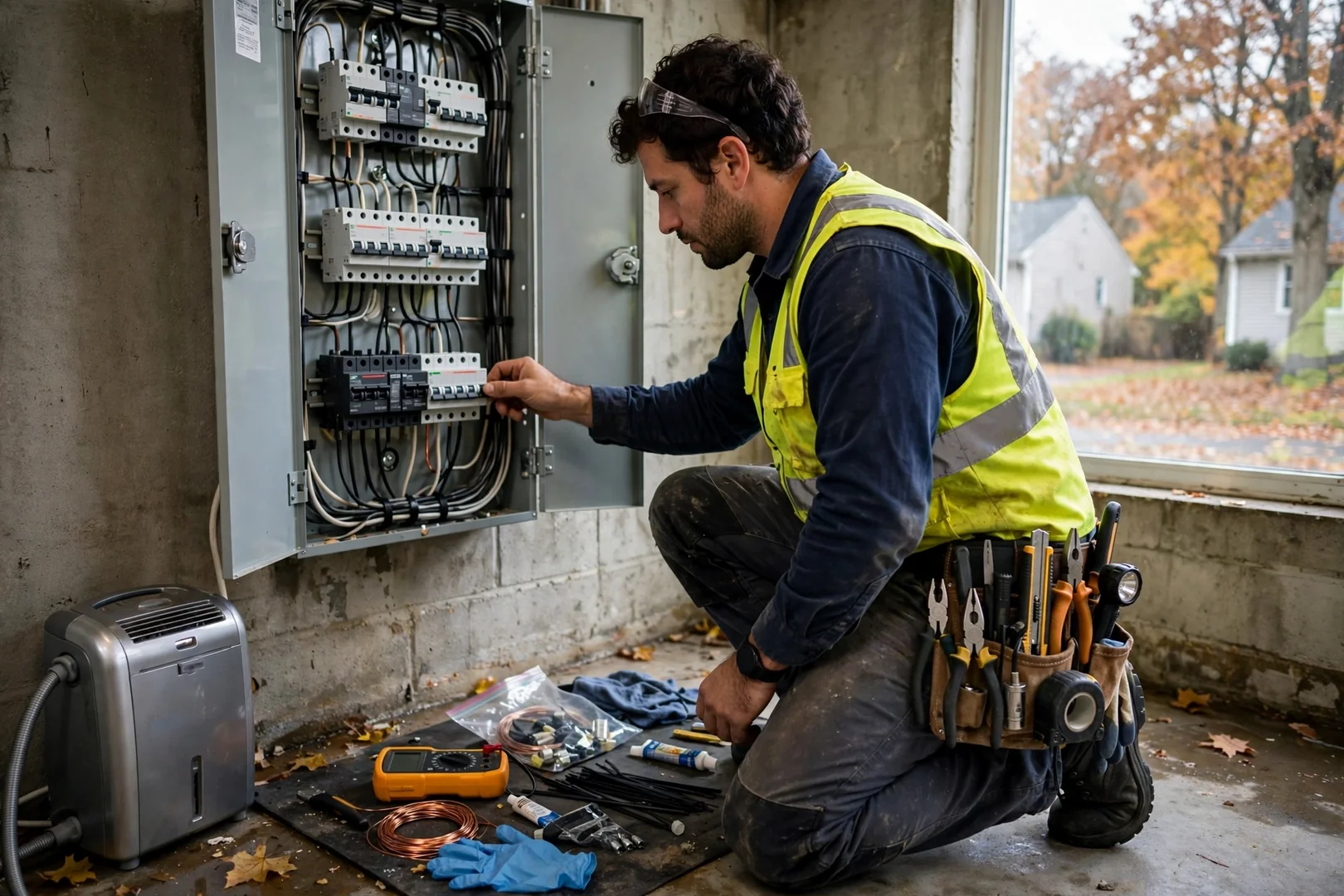
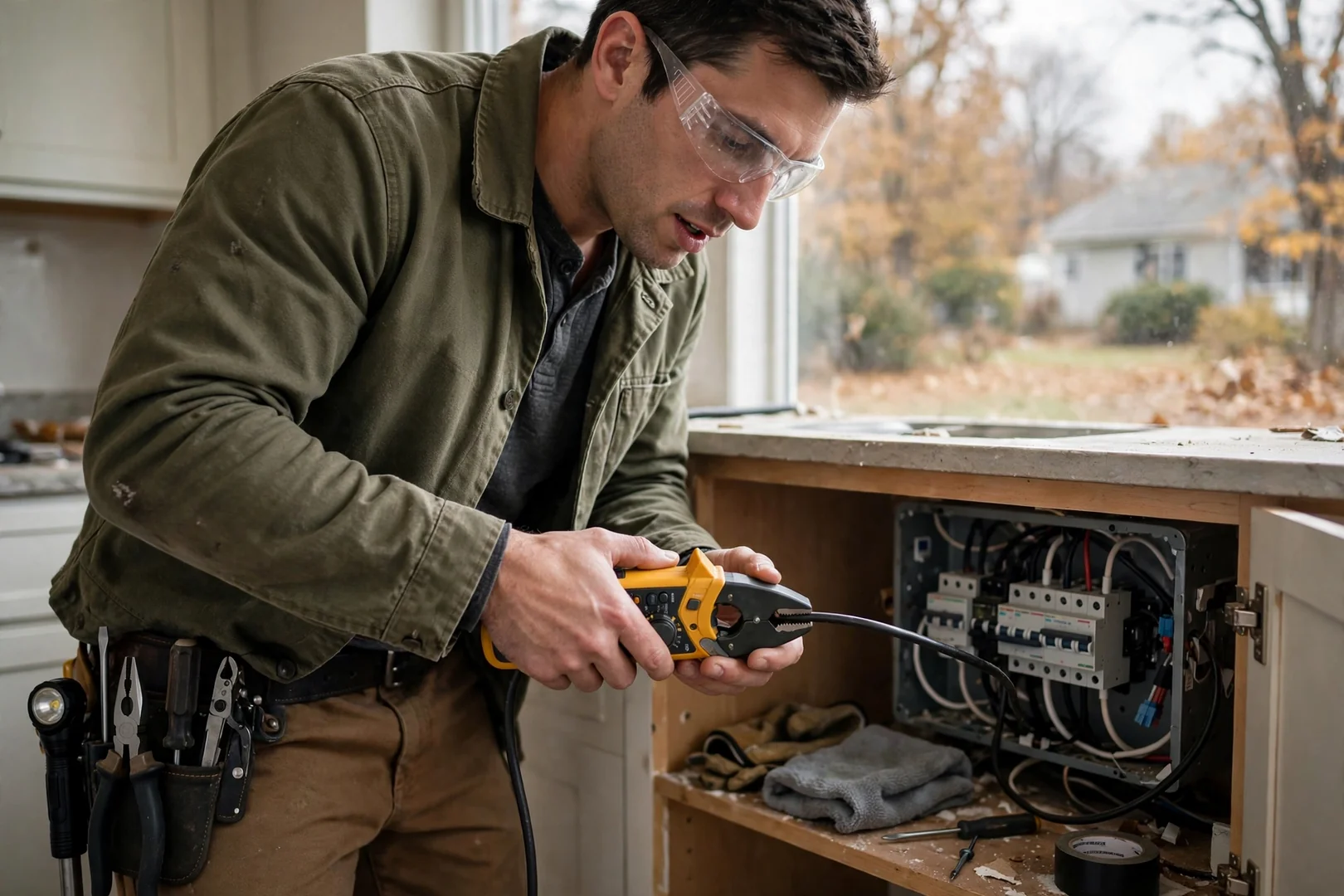
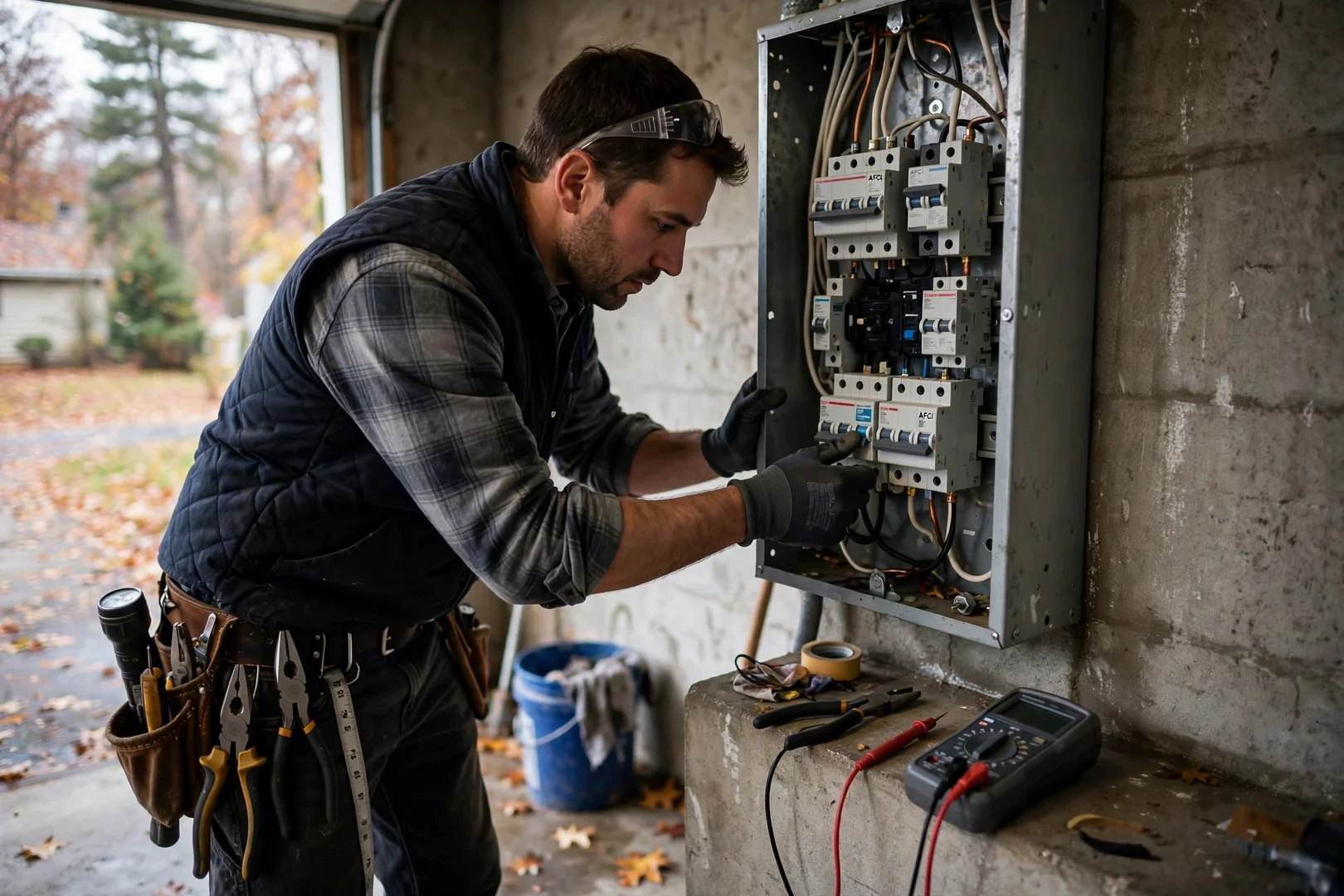
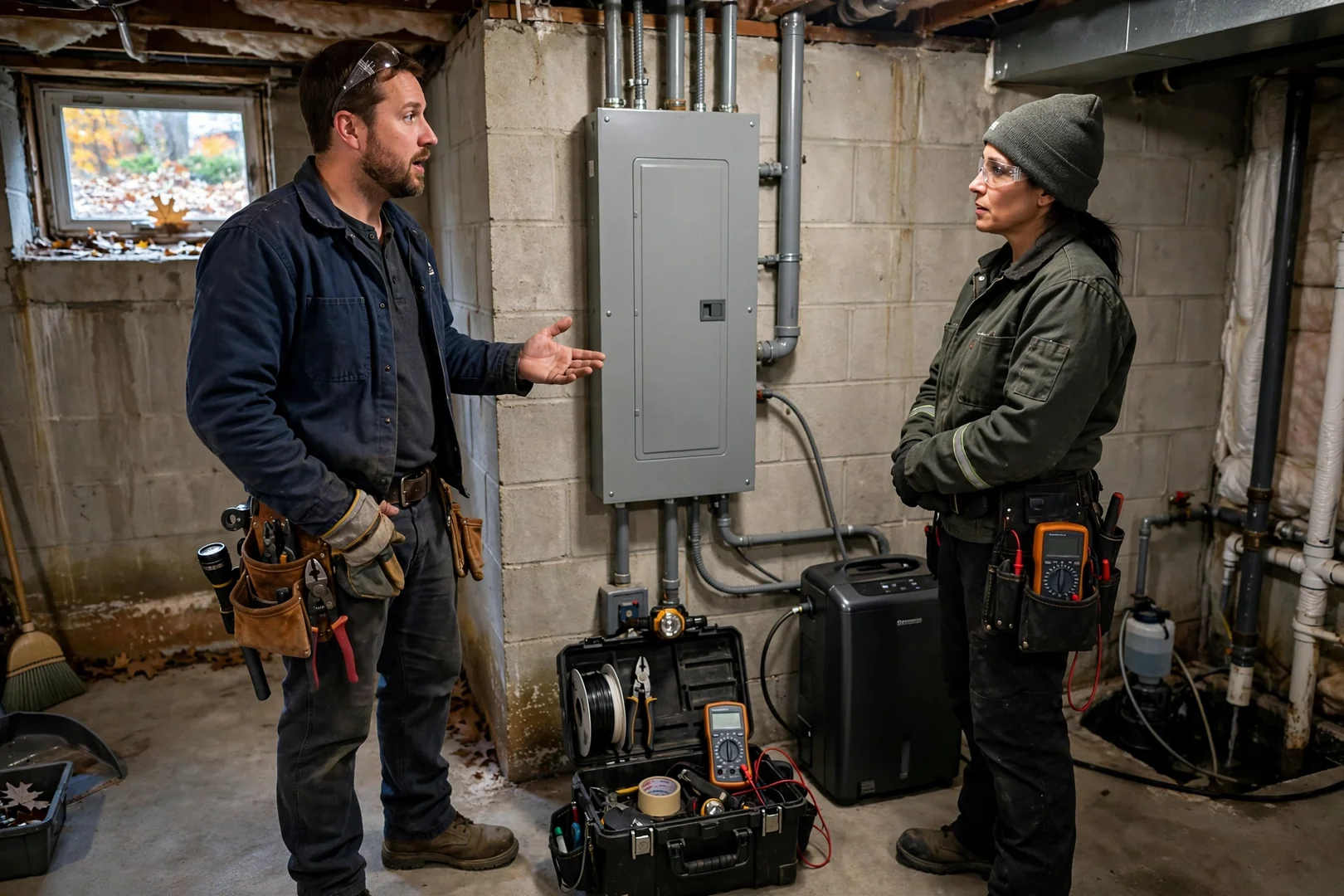
Circuit breaker repair pricing in Coram depends primarily on breaker type and amperage, panel brand and age, the extent of heat damage at the bus bar or lug, and whether the fault traces back to branch circuit wiring, with most 2026 jobs landing inside predictable local ranges. Single-pole replacements on a current-production load center sit at the lower end, while obsolete panels needing discontinued or retrofit-classified breakers cost more to source. AFCI and GFCI breakers price higher than standard thermal-magnetic units. Diagnostic time also shifts the total, since repeat nuisance tripping often requires clamp meter load readings and insulation resistance testing across multiple circuits.
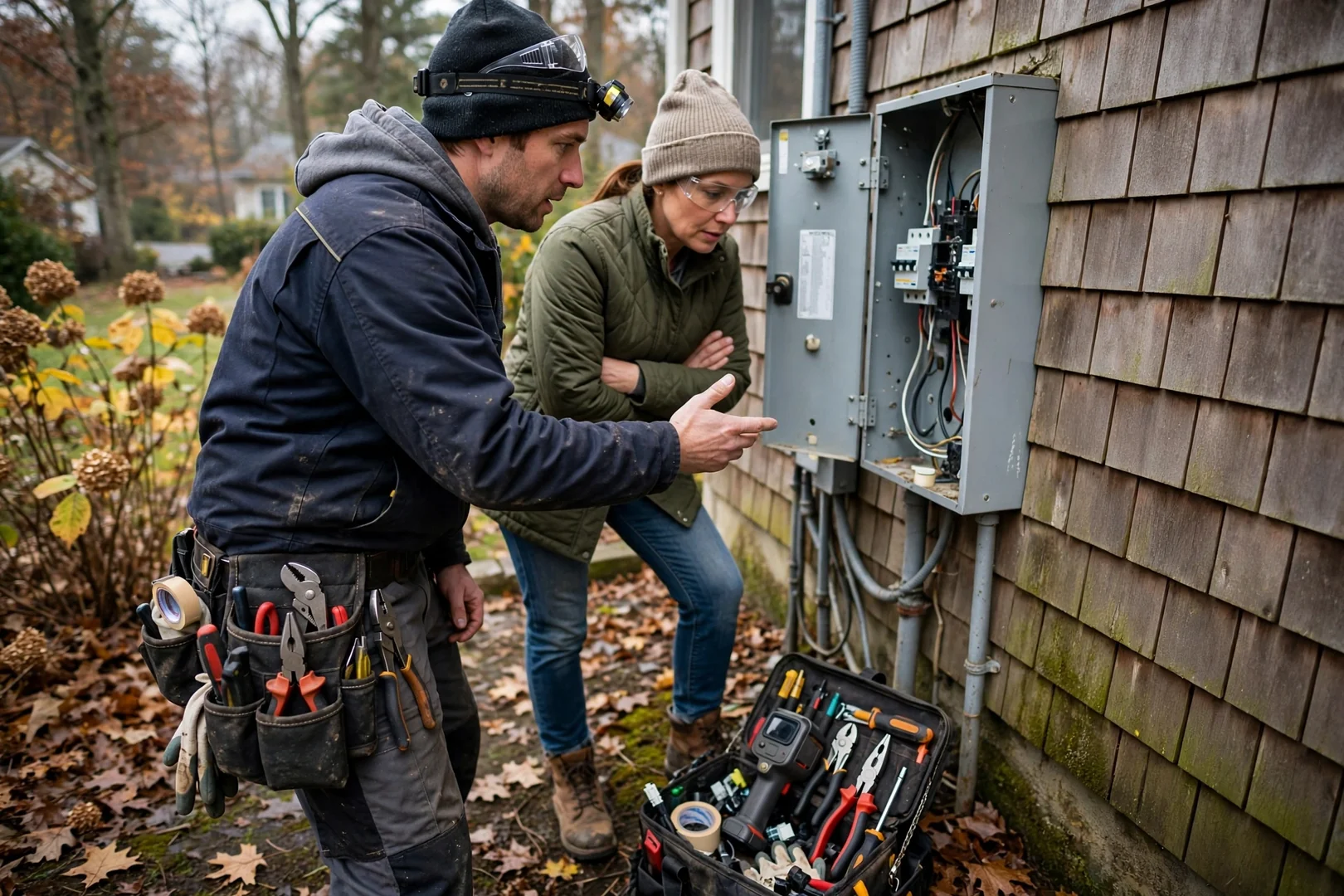
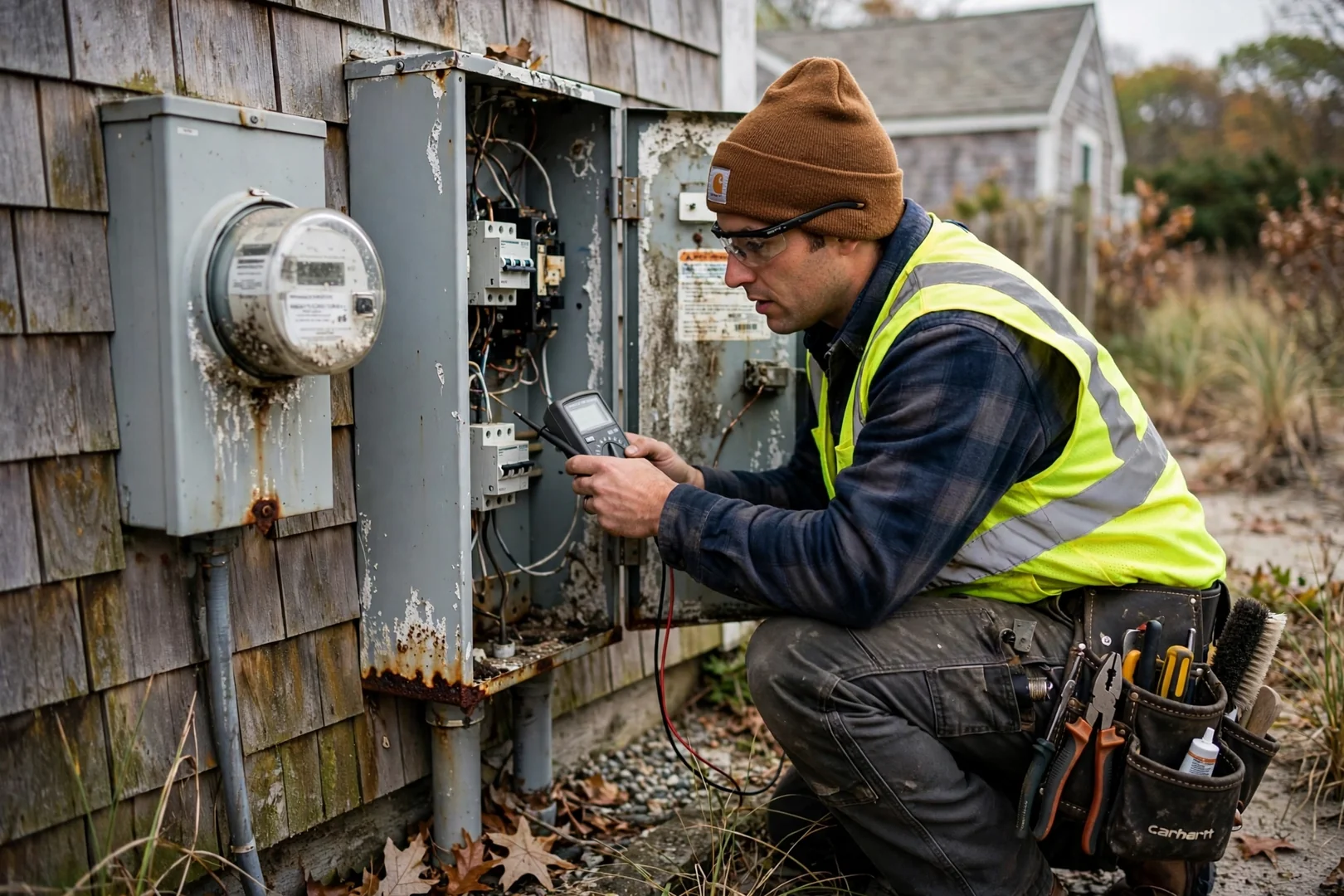
Salt-influenced humidity along this stretch of Long Island accelerates terminal corrosion, so some Coram panels need bus stab cleaning or lug replacement alongside the breaker itself. Access matters too. Panels tucked into finished basements, garages, or exterior enclosures take longer to open, isolate, and torque back to spec. Exact numbers require an on-site assessment with the main shut down and the deadfront removed, because scorching and pitting are only visible once the cover is off. Every Coram visit ends with a free written estimate that itemizes parts, labor, and any recommended follow-up work before we proceed.